
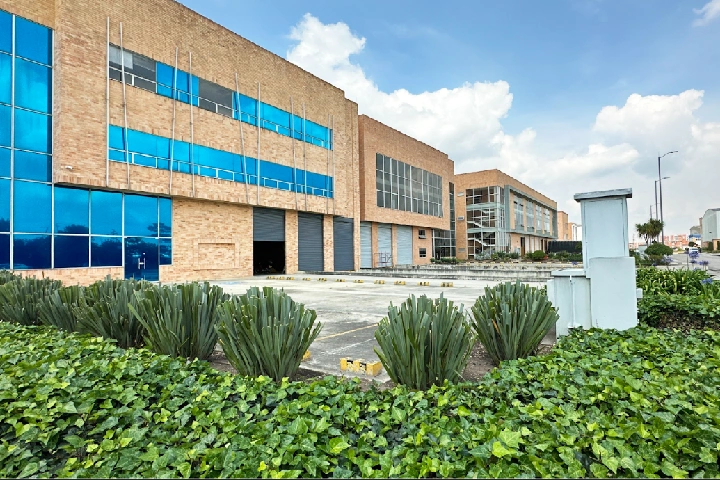
Currently, the drive toward sustainability and environmental protection is reshaping business and logistics strategies globally. One of the most prominent examples of this trend is Zona Franca de Occidente (“ZFO”) , a leader in the implementation of green logistics in Colombia, which has joined the UNIDO (United Nations Industrial Development Organization) Eco-Industrial Parks program . In this free trade zone, sustainability is not just a trend, but an integral part of the business strategy, which advocates for a more circular economy and efficient environmental management.
Free trade zones are not only perceived as spaces offering tax and customs benefits, but also as centers of business innovation and sustainability, especially in a context of growing environmental awareness.
Western Free Trade Zone: A model of sustainability
ZFO has distinguished itself not only through the economic and operational benefits it offers to companies, but also through its focus on environmental sustainability and the implementation of green logistics practices . In this regard, ZFO is an active participant in UNIDO's Eco-Industrial Parks program , a global project that promotes the creation of industrial environments that foster economic development without compromising environmental quality.
This commitment to sustainability is reflected in various initiatives that make ZFO a role model:
1. Rainwater ponding: 32,000 m3
One of the key aspects of sustainability in the free trade zone is the efficient management of water resources. ZFO has implemented a rainwater harvesting system with a capacity of 32,000 m³ . This system allows rainwater to be used in industrial processes and for the maintenance of the business park, significantly reducing the consumption of potable water.
In 2024, 208.478 liters of rainwater were used in the Free Trade Zone's processes.
2. Wastewater treatment plant
Proper wastewater treatment is another key component of ZFO 's sustainable approach.
The park features a modern wastewater treatment plant that processes 2 to 3 liters per second , purifying the water by 98% before it is discharged into the Mosquera ecosystem. This process minimizes the negative impact of waste on surrounding ecosystems, protecting local biodiversity and reducing pollution.
3. Circular economy and industrial symbiosis program
The circular economy and industrial symbiosis are key concepts in corporate sustainability and green logistics. In this model, resources are used efficiently, waste generation is minimized, and the recycling and reuse of materials are promoted. At ZFO , companies have adopted these concepts, which foster collaboration among them for the shared management of resources, the recycling of materials, and the optimization of production processes. Proof of this is that in 2024, 367 tons of usable material were generated.
Industrial symbiosis promotes the use of waste produced by one company as input by others, reducing the need to consume natural resources and decreasing the amount of waste generated in production processes.
Green Logistics: A pillar of sustainable business development
Green logistics is another key component of ZFO 's business management . Through the implementation of clean technologies, reduction of their water footprint, and the use of low-emission vehicles, companies operating in the free zone are promoting a more environmentally friendly way of managing their logistics operations. The integration of efficient and sustainable transport systems contributes significantly to reducing the carbon footprint and achieving global sustainable development goals, as does the use of renewable energy within the park.
Furthermore, the free trade zone's proximity to major consumer centers and transportation infrastructure such as ports, airports, and major highways facilitates logistics interconnection, optimizing delivery times and reducing fossil fuel consumption, which improves the efficiency of supply chains while reducing environmental impact.
Thanks to its participation in the UNIDO Eco-Industrial Parks program , its advanced ecological infrastructure and the promotion of practices such as green logistics and the circular economy/industrial symbiosis, ZFO is emerging as a role model for other free zones and industrial parks, contributing to the development of a more responsible, efficient and environmentally friendly economy.