

Society is highly interconnected, and we live in an era where competitiveness drives the business difference. Free Trade Zones around the world are key drivers of international trade and economic development. These delimited geographic areas, where special trade and tax regulations apply, have revolutionized the way nations interact economically, providing a favorable environment for foreign investment and business expansion.
Since their emergence in the 1950s, Free Trade Zones have experienced exponential growth worldwide, becoming engines of innovation, employment, and prosperity. Their ability to foster industrialization, facilitate international trade, and promote technology transfer has positioned them as indispensable tools in the pursuit of sustainable economic development.
There are figures that illustrate their importance : “There are 7.500 Free Trade Zones in the world, and around 700 in Latin America. They generate 90 million direct jobs worldwide and account for 40% of global trade. They have adapted to transitional scenarios between distant value chains and new regional chains.”
To focus more specifically on the region, in Latin America , Free Trade Zones achieve remarkable export figures . A report by the Association of Free Trade Zones of the Americas ( AZFA) details that total exports from these zones in the region amount to nearly US$60.000 billion, according to 2022 data . The report also adds that in some countries, these exports represent more than 30% of the country's total exports; for example, in the Dominican Republic, this percentage reaches 58%.
In the specific case of Colombia, the figure reaches USD $2.777 billion, where 147 thousand jobs are generated. Based on this last figure, the country ranks third among the places that generate the most jobs, according to data reported in 2022.
In this context, Latin America is emerging as a key region in the global Free Trade Zone landscape, standing out for its dynamism and growth potential. With a wide diversity of economic sectors and a strategic location, Latin American countries are capitalizing on their value to boost their competitiveness and attract foreign investment.
From Zona Franca de Occidente , we will analyze the importance of Free Trade Zones worldwide, focusing especially on their impact and evolution. From their emergence to their current role as engines of economic development, it is crucial to understand how they transform the regional and global economic landscape, driving growth, innovation, and trade integration.
The Importance of Free Trade Zones in the World
They represent an innovative response to the challenges of the globalized economy, offering a unique business environment that drives economic growth and global competitiveness. Their importance lies in several key aspects, ranging from attracting investment to promoting international trade and job creation.
- Attracting foreign direct investment

Free trade zones worldwide are magnets for foreign direct investment (FDI), attracting capital from around the globe to specific regions. By offering tax incentives, streamlined customs procedures, and access to quality infrastructure, they create a favorable environment for foreign companies to establish operations and expand their business activities.
This flow of investment contributes to the economic development of host countries by stimulating investment in strategic sectors and the transfer of knowledge and technology.
In the case of Colombia, according to AZFA, “free trade zones worldwide are by far the best instrument for attracting FDI to countries in our region. Investments to date amount to almost US$40.000 billion, and in countries like Colombia, they exceed US$11.000 billion.” Data reported in 2022.
The country leads the list, surpassing other major national players, demonstrating the good work being done to position itself as a global hub for free trade zones.
 Source: AZFA
Boosting international trade and productive diversification
Another crucial aspect of Free Trade Zones worldwide is their ability to foster international trade and productive diversification. By facilitating the exchange of goods and services between domestic and foreign companies, these special economic areas promote the integration of local economies into the global value chain.
Furthermore, by providing a favorable environment for innovation and technological development, Free Trade Zones around the world stimulate the diversification of host countries' productive bases, reducing their dependence on specific economic sectors and strengthening their resilience to changes in the international economic environment.
In the case of Colombia, this represents a significant contribution to exports. According to the National Administrative Department of Statistics ( DANE ), “in December 2023, merchandise exports from Colombian free trade zones registered an increase of 53,9%, rising from US$201,0 million FOB in December 2022 to US$309,2 million FOB in the same month of 2023. ”
Showing another indicator of how the country continues to strengthen itself through Free Trade Zones around the world.
Job creation and human resource development
Free Trade Zones worldwide play a crucial role in job creation and human resource development in local communities. By attracting investment and promoting business creation, these special economic zones develop a wide range of job opportunities in diverse sectors, from manufacturing and logistics to services and technology.
Furthermore, by offering training and professional development programs, Free Trade Zones around the world contribute to strengthening the technical and managerial capabilities of the local workforce, preparing it to face the challenges of the globalized labor market.
The Rise of Free Trade Zones in Latin America
In Latin America, Free Trade Zones are experiencing significant growth and are key players in the regional economy. Countries such as the Dominican Republic, Costa Rica, Panama, and Colombia are pioneers in the establishment and development of Free Trade Zones around the world and on the continent, attracting investment and promoting productive diversification.
Colombia: Boosting Competitiveness
For its part, Colombia actively promotes them as part of its economic development and investment attraction strategy. With a wide variety of industrial, commercial, and service Free Trade Zones, the country has strengthened its position as an export platform and regional operations center for multinational companies.
We can say that these are world-class Free Trade Zones, with best practices and benefits. This is the case of the Western Free Trade Zone , which offers numerous advantages and an attractive infrastructure for companies that establish themselves there.
Dominican Republic: a benchmark in free trade zones
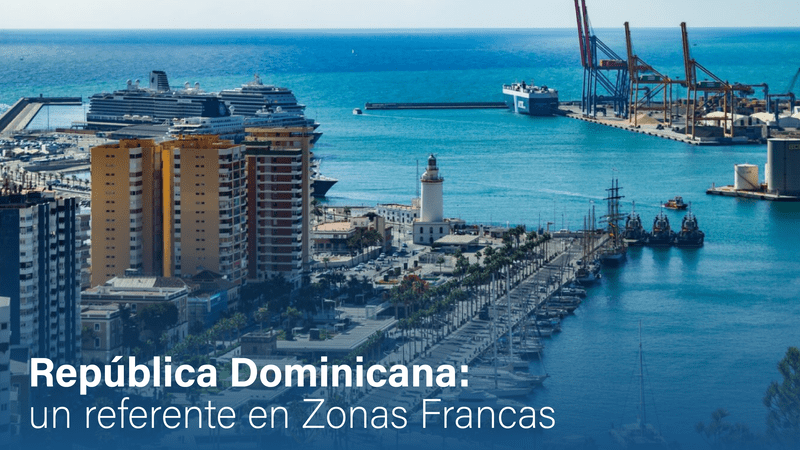
The Dominican Republic stands out as one of the leaders in promoting Free Trade Zones in the region. With more than 70 industrial parks and thousands of companies operating in these areas, the Caribbean country has established itself as an attractive destination for foreign investment.
Dominican Free Trade Zones contribute to job growth, the export of goods and services, and the development of value chains in sectors such as textiles, manufacturing, and technology.
The importance of Free Trade Zones worldwide lies in their ability to attract foreign investment, boost international trade, and generate employment, thus contributing to sustainable economic development and the integration of economies into the global economy.
Their role as engines of growth and agents of change in the global economic landscape remains critical in an increasingly interconnected and competitive world.
Promoting innovation and technology transfer
Free Trade Zones worldwide are not only centers of economic activity, but also incubators of innovation and technology transfer. This essential dimension is increasingly recognized in the context of the global economy, where innovation and technology play a fundamental role in the competitiveness of businesses and economies.
Facilitators of technology transfer
Free Trade Zones serve as platforms for technology transfer between local and foreign companies. Multinational companies establishing operations in free trade zones often share technical knowledge, best practices, and innovative processes with their local counterparts.
This technology transfer strengthens the capacities of local organizations, which also contributes to the development of industrial clusters and the creation of synergies between different sectors.
Incubators for startups and technological ventures

In addition to established companies, Free Trade Zones worldwide often host startup incubators and innovation centers that support entrepreneurs and emerging businesses.
These spaces provide access to financial resources, expert mentors, cutting-edge infrastructure, and connections to global networks, facilitating the development and commercialization of new technologies and business solutions.
In other words, they contribute to creating a dynamic business ecosystem that drives economic development and global competitiveness. By fostering collaboration, experimentation, and knowledge sharing, these special economic areas are catalysts for a knowledge- and innovation-based economy, paving the way for sustainable growth and long-term prosperity.
Unlock your company's potential! Discover how Zona Franca de Occidente supports you and offers benefits to help you achieve your business goals. Activate your growth now by contacting us and getting your questions answered by our experts.